
Fishing Spider: Get to Know It in Under 5 Minutes
Quick Answer
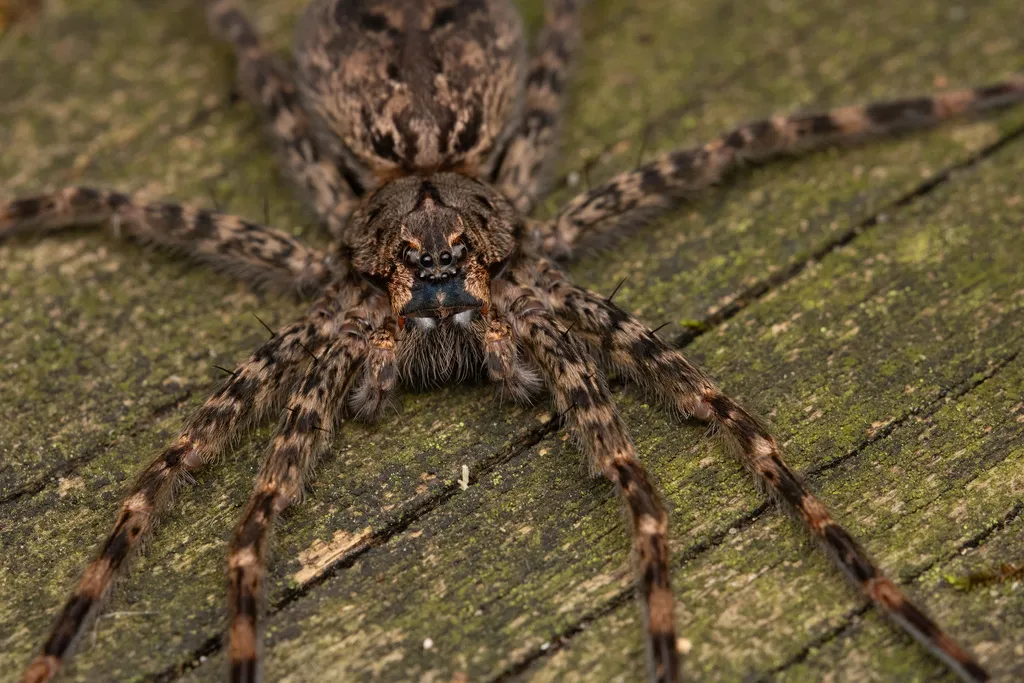
A fishing spider is a large, semiaquatic spider in the genus Dolomedes (family Dolomedidae). It lives around ponds, streams, wetlands and wooded areas, and it can run across the water surface to catch aquatic insects, tadpoles and even small fish. Females have a leg span that can approach 3 to 4 inches. They have venom, but they are shy, rarely bite, and a bite usually feels like a bee sting. They are not dangerous to most people.
1. Fishing Spider Specifications Table
| Feature | Details |
|---|---|
| Common name | Fishing spider (also called dock spider or raft spider) |
| Scientific name | Dolomedes spp. |
| Family | Dolomedidae (older sources list it under Pisauridae, the nursery web spiders) |
| Number of species | Around 100 worldwide; 9 in North America |
| Body length (female) | About 15–26 mm (0.6–1 inch) |
| Body length (male) | About 7–13 mm (0.3–0.5 inch) |
| Leg span | Up to about 75–100 mm (3–4 inches) in large females |
| Legs / eyes | 8 legs, 8 eyes in two rows |
| Body coloration | Brown, gray or dark brown, with light and dark markings and banded legs |
| Habitat | Freshwater edges, ponds, streams, wetlands, docks and wooded areas |
| Diet | Aquatic and land insects, tadpoles, small fish, small frogs |
| Lifespan | Usually about 1–2 years; females outlive males |
| Venom | Present; mild for humans, similar to a bee or wasp sting |
| Web use | Does not build a web to catch prey; uses silk for egg sacs and nursery webs |
2. How Many Types of Fishing Spiders Are There?
The Dolomedes genus has roughly 100 known species spread across every continent except Antarctica. Asia has the largest number, followed by tropical Africa. North America has nine species, and Europe has two.
Here are the fishing spider species people ask about most:
- Dark Fishing Spider (Dolomedes tenebrosus) – The biggest and most common one in eastern North America. It often lives on tree trunks, far from water.
- Six-Spotted Fishing Spider (Dolomedes triton) – A true water hunter found on ponds, lake edges and docks. It is named for the six dark spots on the underside of its front body.
- Striped Fishing Spider (Dolomedes scriptus) – Lives along streams and has white “W”-shaped marks on the back of its abdomen.
- Whitebanded Fishing Spider (Dolomedes albineus) – A tree-dwelling species of the southeastern United States.
- Banded Fishing Spider (Dolomedes vittatus) – A stream-dwelling species of eastern North America.
- Raft Spider (Dolomedes fimbriatus) – Found on bog pools and wet grassland across Europe and Asia.
- Great Raft Spider (Dolomedes plantarius) – A fen-dwelling European species. It is listed as endangered in Great Britain.
- Dolomedes aquaticus – A New Zealand species that hunts along riverbanks and lakeshores.
Dark vs. Six-Spotted vs. Striped Fishing Spider
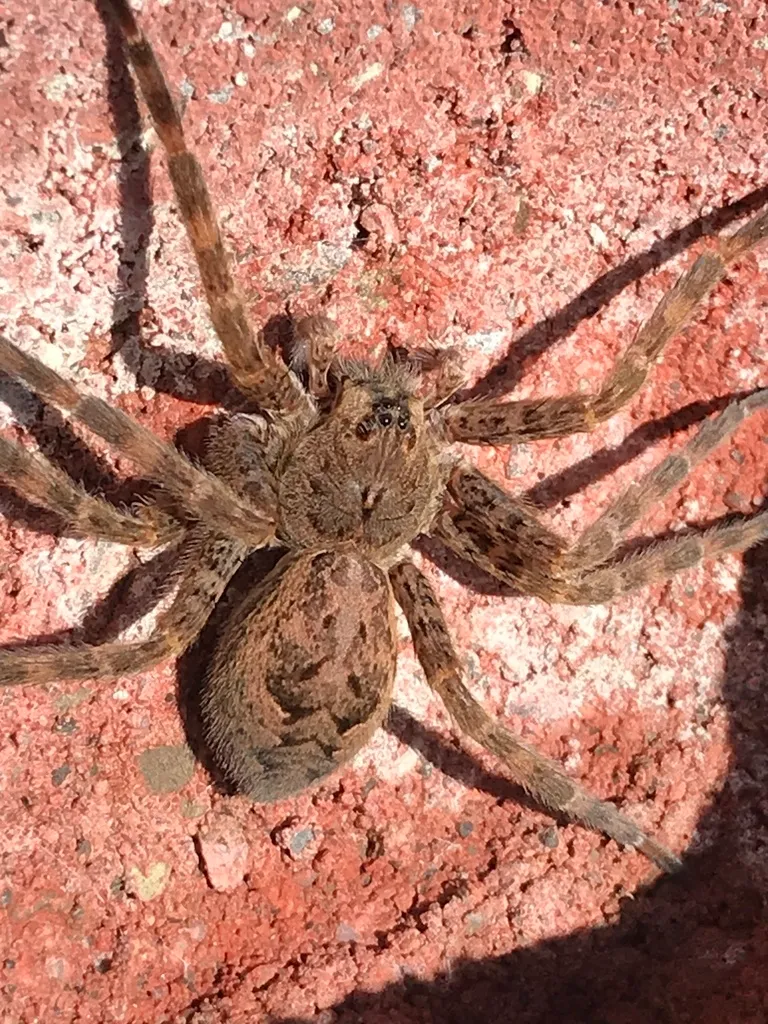
Dark Fishing Spider (Dolomedes tenebrosus)
The largest and most common in eastern North America. Often found on tree trunks, far from water.
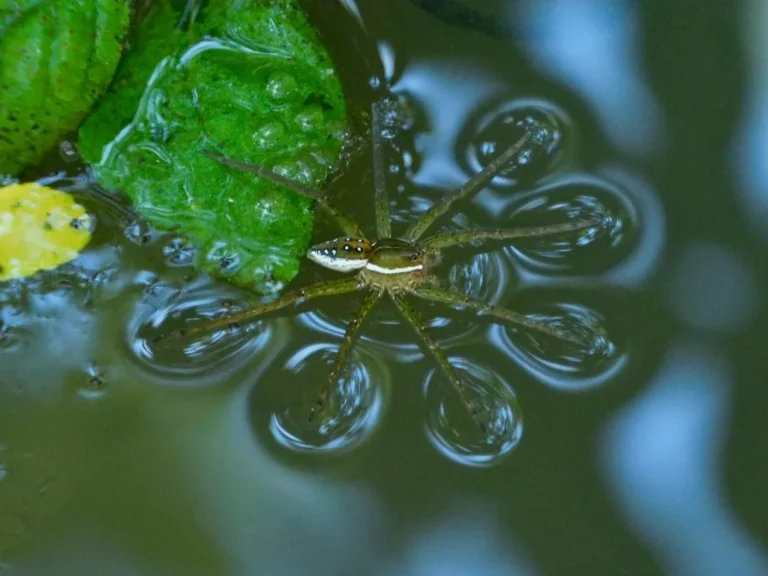
Six-Spotted Fishing Spider (Dolomedes triton)
A true water hunter of ponds, lake edges and docks, with a pale stripe along each side of the carapace.
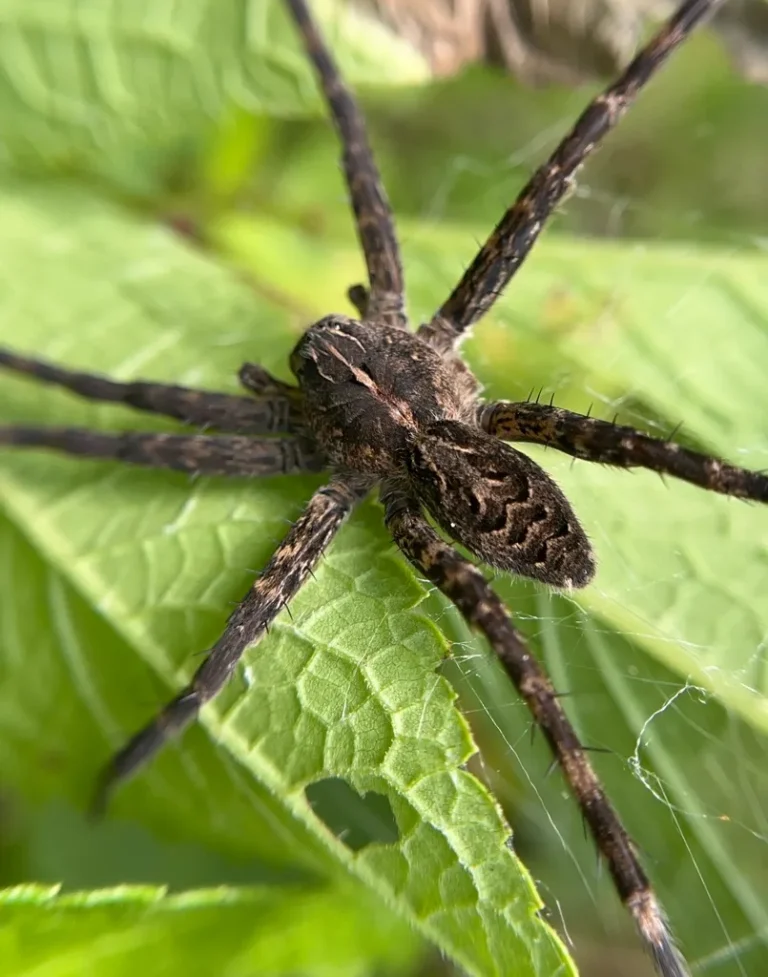
Striped Fishing Spider (Dolomedes scriptus)
Lives along streams and has white “W”-shaped marks on the back of its abdomen.
3. What Does a Fishing Spider Look Like?
It is a large, long-legged spider with a flat, sturdy body. Its color helps it blend in with tree bark, rocks and dead leaves near water.
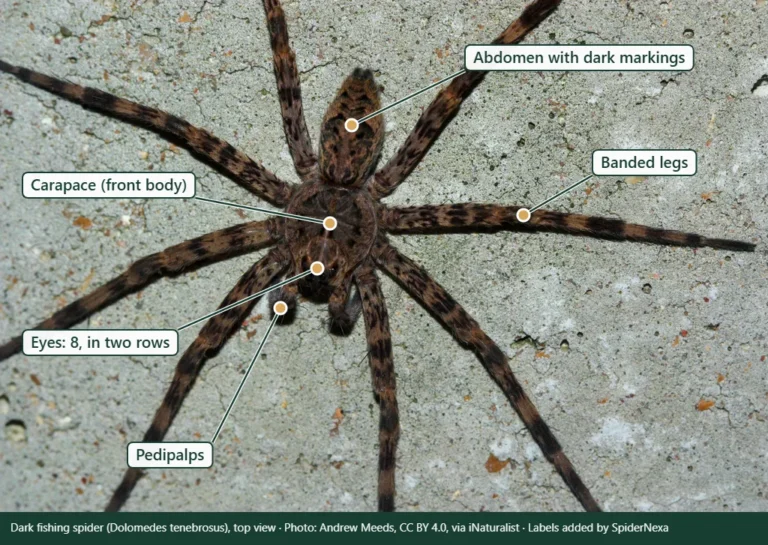
Key identification features:
- Body color: Brownish-gray to dark brown. Young dark fishing spiders can sometimes look orange.
- Carapace (front body section): Often has a pale stripe or band along each side, especially in the six-spotted fishing spider.
- Abdomen (back body section): Has dark markings, chevrons or W-shaped markings. Some species show small white abdominal spots.
- Legs: Long and clearly banded with light and dark rings. The legs stretch out wide when the spider rests.
- Hairs: The body is covered in fine, velvety hairs that repel water.
- Eyes: Eight eyes in two curved rows of four. The eyes are fairly small and similar in size.
Male vs. female fishing spider: Females are much bigger. In the dark fishing spider, a male can be less than half the female’s size. Males also have thinner bodies and enlarged pedipalps (the small “arms” near the mouth), which they use for mating.
4. Where Are Fishing Spiders Most Commonly Found?
Fishing spiders live in many parts of the world, but they are most often seen in North America, including the eastern and central United States and southern Canada.
Near water: Most species live in freshwater habitats such as ponds, lakes, slow streams, wetlands, swamps and bogs. They rest on floating plants, rocks, logs and boat docks with their front legs touching the water.
Away from water: The dark fishing spider is the big exception. It usually lives in wooded areas and forests, resting head-down on tree trunks or hiding under loose bark. That is why many people find it on decks, sheds, fences and house walls far from any pond.
Around homes: They sometimes show up near swimming pools, in garages and in basements, especially in homes close to woods or water.
5. Is a Dark Fishing Spider Poisonous?
No. The correct word is venomous, not poisonous. A poisonous animal harms you when you eat or touch it. A venomous animal injects venom through a bite or sting.
The dark fishing spider (Dolomedes tenebrosus) uses its fangs (part of the chelicerae, or jaws) to inject venom into prey. The venom is strong enough to stop insects and small fish, but it is not medically serious for healthy adults.
If it bites a person, it is almost always a defensive bite — for example, when the spider is grabbed or pressed against skin. The usual result is sharp pain, mild redness and swelling for a short time. People who are sensitive or allergic to insect stings or spider venom may have a stronger reaction and should watch the bite closely.
6. Can a Fishing Spider Bite Humans?
Yes, a fishing spider can bite, but it rarely does. Bites usually happen only when the spider is handled, trapped in clothing or squeezed.
What a fishing spider bite feels like:
- A quick, sharp pain at the bite site
- Two small fang marks
- Mild redness, swelling or itching
- Discomfort that usually fades within hours to a day or two
According to Mississippi State University Extension, people who have been bitten often compare it to a bee sting or wasp sting. Because the spider is large, its fangs can break human skin, which is why the bite is noticeable even though the venom is weak for people.
7. Is the Fishing Spider Friendly to Humans?
This spider is not “friendly” like a pet, but it is not aggressive either. It is a shy, non-aggressive spider that prefers to run, hide or dive underwater when a person comes close.
Why they are harmless to most people:
- They do not chase or attack humans.
- Their first reaction is escape, not biting.
- Their bite is mild for most adults.
Why they are helpful: These spiders eat many insects around ponds, docks and homes. This helps keep insect numbers in balance in wetland food webs.
Their big size can trigger arachnophobia (fear of spiders), especially when one appears indoors. If you find one inside, gently trap it under a cup, slide paper underneath and release it outside. Avoid picking it up with bare hands.
8. Fishing Spider vs. Wolf Spider
Fishing spiders and wolf spiders look alike because both are large, brown and hairy. Here is how to tell them apart:
| Feature | Fishing Spider (Dolomedes, Dolomedidae) | Wolf Spider (Lycosidae) |
|---|---|---|
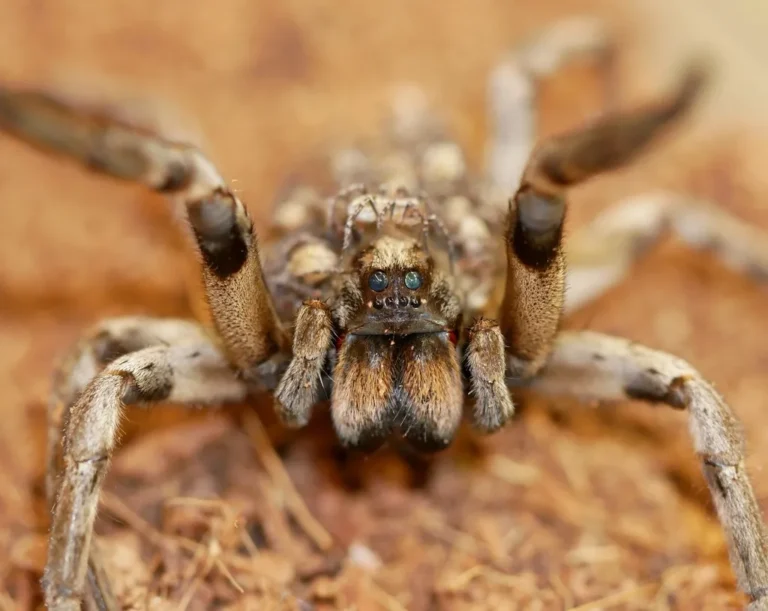
| Eye arrangement | 8 eyes in 2 rows of 4, all fairly small | 8 eyes in 3 rows (4-2-2), with 2 large eyes facing forward |
| Leg span | Very long legs; females up to 3–4 inches | Usually shorter legs; most are smaller overall |
| Body markings | Banded legs, light and dark patterns, chevrons | Often stripes running lengthwise down the body |
| Habitat | Water edges, docks, tree trunks | Ground-dwelling hunters in grass, soil and leaf litter |
| Water skills | Runs on water and dives underwater | Mostly stays on land |
| Egg sac carrying | Held in the female’s jaws (chelicerae) | Attached to the female’s spinnerets at the rear |
| Care of young | Builds a nursery web and guards spiderlings | Carries spiderlings on her back |
Easiest check: Look at where the female holds her egg sac. Jaws = fishing spider. Rear end = wolf spider.
9. What Does the Fishing Spider Eat?
These spiders are ambush predators. They do not use webs to catch food. Instead, they rest at the water’s edge with their front legs on the surface and wait.
How they catch prey:
- Sensitive leg hairs pick up water surface vibrations from a struggling insect or swimming animal.
- The spider can tell the difference between prey and things like falling leaves or wind.
- It runs across the water, grabs the prey with its front legs, and injects venom.
- It drags larger prey to dry land to feed.
Fishing spider diet includes:
- Aquatic insects such as water striders, damselflies and mosquito larvae
- Land insects that fall into water, plus crickets and other invertebrates
- Tadpoles and small frogs
- Small fish such as minnows and mosquitofish
- Slugs and other soft-bodied invertebrates (mostly for tree-living species)
Do fishing spiders really eat fish? Yes. A 2014 review in the journal PLOS ONE found that spiders catch fish on every continent except Antarctica, with many records from North American wetlands. Some spiders caught fish weighing up to 4.5 times their own body weight. Even so, insects make up most of their diet.
10. How Long Is the Life Cycle of a Fishing Spider?
Most species live about 1 to 2 years. Females usually live longer than males.
Fishing spider life cycle stages:
- Mating (late spring to summer): Males look for females and often pick unmated ones by the scent of their silk. Mating is risky. Females may eat males before or after mating, which is called sexual cannibalism. In the dark fishing spider, research shows males die on their own during mating.
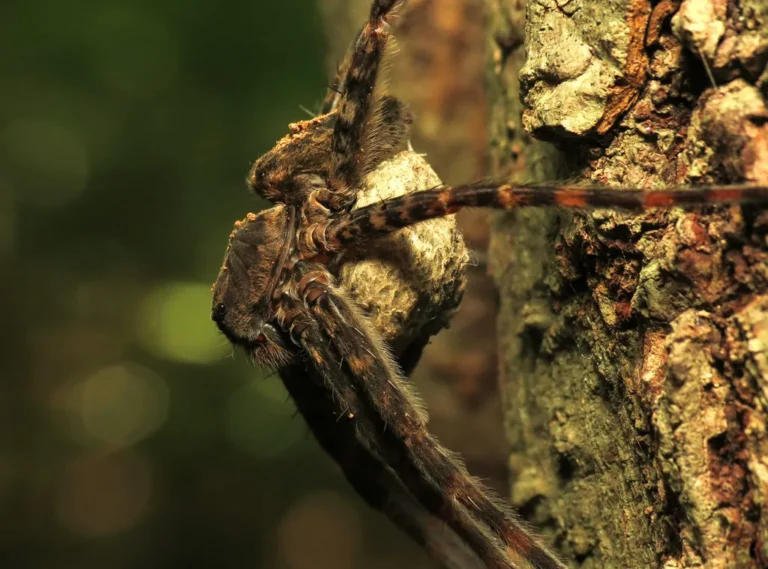
- Egg sac: About 10–14 days after mating, the female makes a round egg sac that can hold 1,000 or more eggs. She carries it in her jaws for weeks and does not eat during this time.
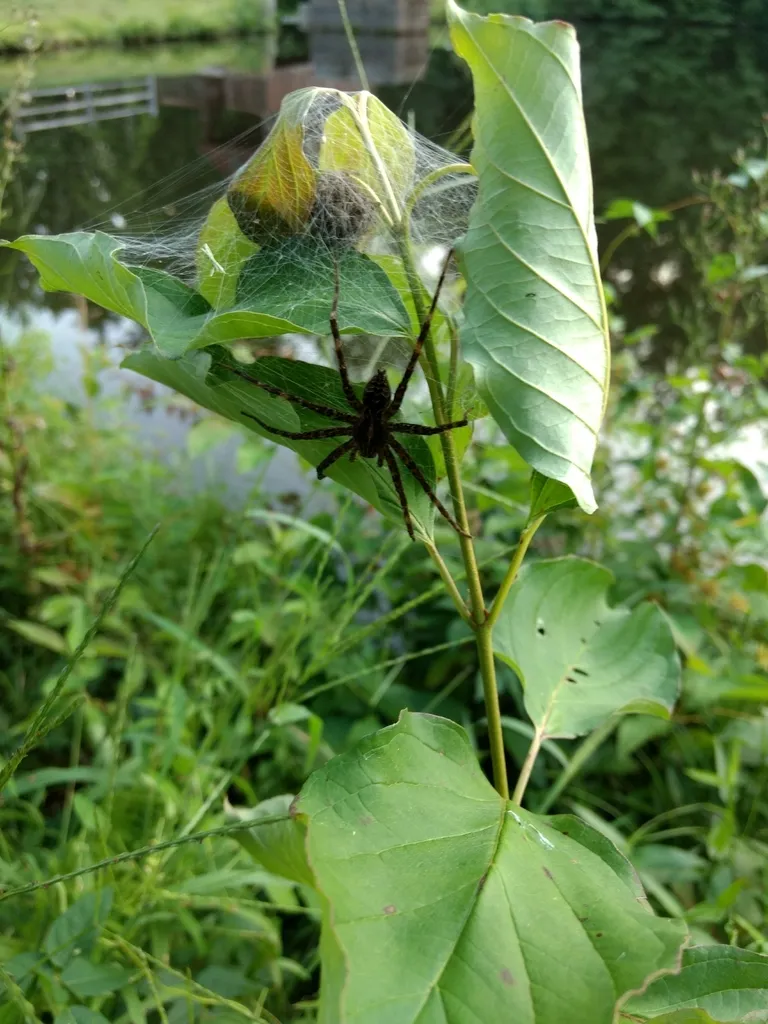
- Nursery web: Just before the eggs hatch, she builds a tent-like nursery web in plants or shrubs and places the egg sac inside. She guards it — this is maternal care.
- Spiderlings: Baby spiders hatch in mid-summer and stay in the nursery web for about a week, then spread out on their own.
- Molting and growth: Juveniles grow by shedding their skin (molting) many times. The stage before adulthood is called the penultimate instar.
- Overwintering: Partly grown spiders survive winter under loose bark, rocks, leaf litter or in tree holes, then mature the next spring and start the breeding season again.
Frequently Asked Questions About Fishing Spiders
Can fishing spiders walk on water?
Yes. Fishing spiders have hydrophobic legs covered in water-repellent hairs, so they rest on the water surface film without sinking. Their weight makes small dimples in the water. When they “row” with their middle legs, they push against these dimples to move forward. Research on the six-spotted fishing spider showed that drag from the dimples, not surface tension alone, drives most of this movement.
What should you do if a fishing spider bites you?
Follow simple first aid:
- Wash the bite with soap and water.
- Put a cold pack on it for 10 minutes to reduce pain and swelling.
- Take an over-the-counter pain reliever if needed.
- Keep the bite clean and avoid scratching.
See a doctor right away if you notice trouble breathing, swelling of the face or throat, spreading redness, pus or a fever. These can signal an allergic reaction or infection.
Can fishing spiders swim underwater?
Yes. They can dive underwater to escape birds and fish or to grab prey. They hold onto plants or rocks below the surface. Their water-repellent hairs trap a thin air bubble around the body, which covers their breathing openings so they can keep breathing. Six-spotted fishing spiders usually stay under for several minutes and up to about 30 minutes, and they have been recorded submerged for as long as 90 minutes. When they let go, the trapped air floats them back up dry.
Why are fishing spiders found in houses?
These spiders, especially the dark fishing spider, enter homes that are near wooded areas or water. They come in through foundation cracks, gaps under doors and open vents. Basements attract them because they are cool, dark and damp, much like their natural hiding spots. Penn State Extension calls the dark fishing spider a common household invader in wooded locations, and some look for sheltered places to spend the winter. To reduce indoor sightings, seal entry points, fix leaks, use a dehumidifier and clear wood piles away from the house.
Are fishing spiders active at night?
Yes. Most species are nocturnal. They rest during the day on tree trunks, docks or under bark, and they hunt at night. At night they rely mainly on touch and vibration instead of eyesight to find prey. The six-spotted fishing spider is an exception and is often seen hunting in daylight too.
How big can a fishing spider get?
A large female dark fishing spider (Dolomedes tenebrosus) can reach a body length of about 1 inch (26 mm) and a leg span of 3 to 4 inches. That makes it one of the largest spiders in North America. Males are much smaller, often half the female’s size. This big size gap between the sexes is called sexual size dimorphism.